21.06.2019 - Tasho Ishi "Dentsu2060" - 12" and Digital - Out Now!

« DENTSU2060 begins with the re-summoning of Tsuruta Kinshi, the satsuma-biwa player chosen by Toru Takemitsu for his rendition of “November Steps” - a hyper-corporate and hyper-intimate illuminated ensemble piece. SATOSHI NAKAMOTO is a documentary for the Shenzhen region, inspired by J.G. Ballard's "Crash", Satoshi Nakamoto's potential visage, and the voice of the polygonal dragon in the 1993 movie "Arcade". A speediness akin to merikari or digital payment infrastructure's high-octane overload. WINDOW OF HONEYTRAP belongs to the modern tinder concréte continuum. Chase the rainbowbridge is inspired by Initial D, created through the prophet VS’ vector synthesis, and its therefore intended for drives on the Tokyo bayside. I ALWAYS STILL YAKUZA is a luxury field recording captured on floor 52 of the Park Hyatt Shinjuku. The ambience of the Lost in Translation bar scene, scented with reverb…»
Tasho Ishi is a sound designer, image consultant, and advertisement critic currently working for a major record label in Tokyo. He debuted as BRF in 2016 with “BRF-KU” EP and he is active under the same moniker in the Japanese fashion market as a runway music curator. We are proud to present Dentsu2060, his LP debut, as the fifth release under our “Ten Years of Tomorrow” motto.
In a city where advertising has the leading role, how long can a style resonate? Dentsu2060 is an intricate work, a true to life representation of the city in its drifting vanity. By weaving seamlessly field recordings and melodic light points, Tasho composes an unexpected reflection to the upcoming 2020 Tokyo Olympic ceremony or the illuminated soundtrack of a trendy drama. His 9 compositions channel the voice of his city, offering a new, spectacular world view - overexposed under the artificial lights
Written and composed by Tasho ishi
Mixed by Kazuaki Oshima & Tasho Ishi
Dentsu2060 mixed by Naoya Tokunou
Voices by Megazord, Ai, Senni, Kei
Mastered by Giuseppe Ielasi
Photo by Shintaro Tamada
Cat. No. P!?034 – All rights reserved
Now available on our bandcamp and everywhere else: Boomkat, Bleep, Kudos Records, iTunes, Spotify +++
30.05.2019 - Regular Citizen "Sleeping Unique" - CD and Digital - Out Now!
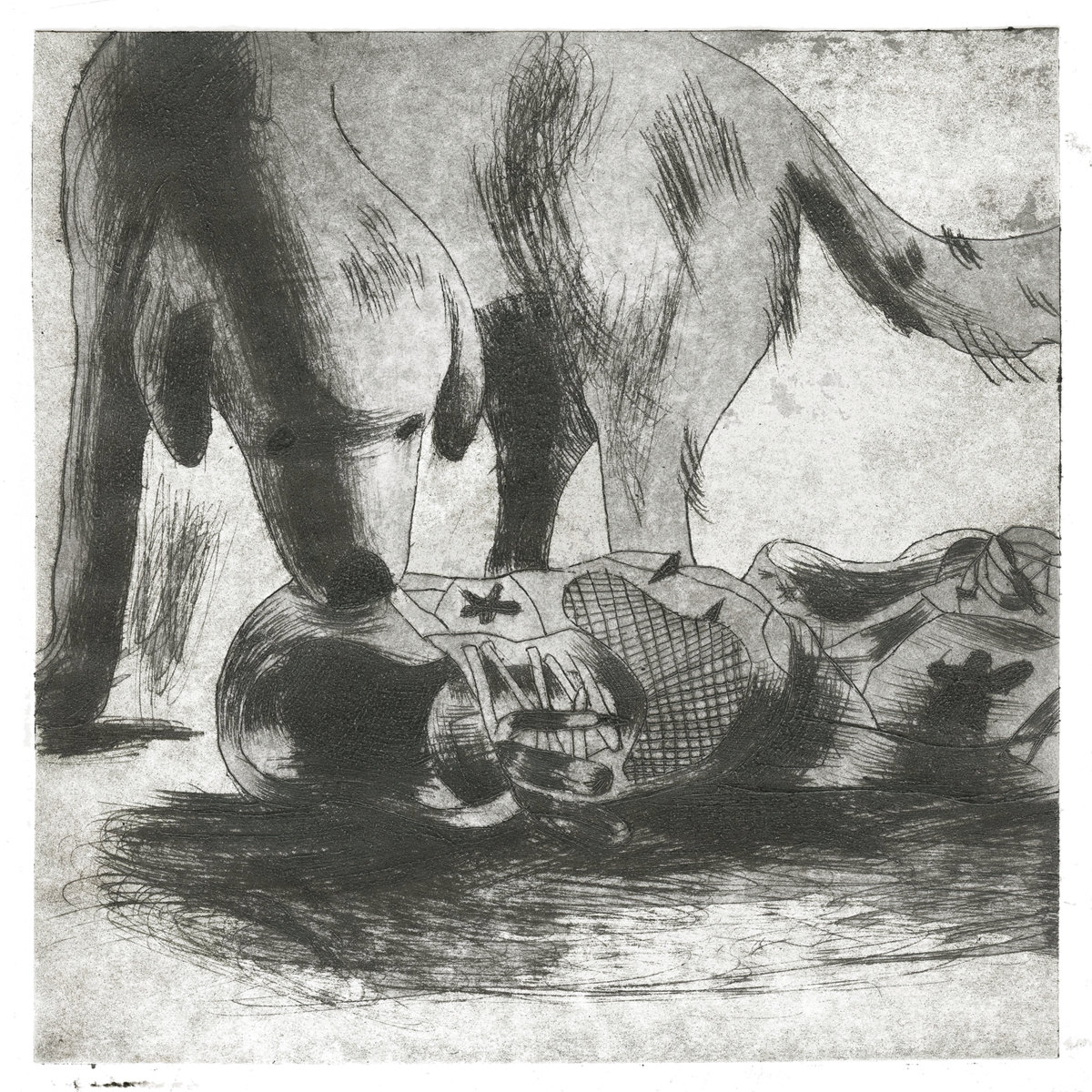
In his uncompromising debut, Regular Citizen hums the tunes of his daily mood storms with 12 minimalistic electronic compositions. Ordinary life is nothing but a curtain of dreams, a display of emotions and circumstances made unique by his sensitivity.
Grown up on the coast of the Pacific Ocean, in the russian port city of Nakhodka, east of Vladivostok, Ivan Olegovich aka Regular Citizen has been describing his life through music since his early childhood, when his father bought him an old piano. His unique sensitivity has been refined through his youth - playing drums in punk bands and city parades, working as a DJ and studio engineer at the local Radio. Now in his early 30s, his attitude toward composition is an exercise of concentration, or as he describes: “a movement towars a inner target.”
We are proud to present Regular Citizen unique impressionist attitude on Presto!? as the fourth release of our tenth year of life, celebrated with events and releases under the “Ten Years of Tomorrow” motto.
Music written and produced by Ivan Olegovich
Artwork by Alexei Sukhov
Mastered by Giuseppe Ielasi
Press photos by Lena Tsibizova
Layout by Natalja Trebaljova and Ruben Spini
Cat. No. P!?033 – All rights reserved
Now available on our bandcamp and everywhere else: Boomkat, Bleep, Kudos Records, iTunes, Spotify +++
22.03.2019 - Triad God "Triad" - 12" Limited Edition & Digital - Out Now!

Triad God returns with his 2nd LP 黑社會 hak- se -wu Triad, spoken word raps in Vinh Ngans native Cantonese narrate and homage the descent to the underworld through a backdrop of Palmistry's productions. Limited edition vinyl. Includes A2 poster and download card.
Triad God, real name Vinh Ngan, is a South London of Vietnamite / Hong Kong descent. Since 2011 his songs feature the rarefied production of Palmistry, the London based vocalist and producer currently signed with Mixpak. He has debuted on Hippos In Tanks in 2012 with the LP NXB and has collaborated in 2013 with James Ferraro on the single "Swarowski".
His awaited return expands on the unique atmosphere of the project, and its encrypted, solo journey under the surface of reality.
Limited edition vinyl available. Includes DL card.
Now available on our bandcamp and everywhere else: Boomkat, Bleep, Kudos Records, iTunes, Spotify +++
25.05.2018 - Mechatok "All My Time" - 12" Limited Edition & Digital - Out Now!

The four tracks composing All My Time reveal a unique bird’s-eye perspective over the contemporary pop landscape, with its ambiguities and fictional public. By developing a personal approach in the bosom of a universal notation, Mechatok informs naturally his compositions with a deep, emotional insight. Ornate but undisposable, All My Time glides through the skies of today’s music with a rejuvenating melody. Limited edition vinyl available. Includes DL card.
Limited edition vinyl available. Includes DL card.
"Berlin’s Mechatok, one of the most nattered-about artists to emerge in recent years, caters to Lorenzo Senni’s Presto!? label with four effervescent spins on melodic dancehall and PointillisticT. Practically taking on Lorenzo at his own thing, Mechatok keeps it perfectly icy and low-key with the simmering hustle of 12 Years, then stealthily starts to come up with the layered trance arps and choral voices of Skies Of Tomorrow, until the big room coda of All My Time takes us by the hand to a hard trance wonderland, or something, where the barely-there dynamics of Flee trace out the phosphorescent afterglow of a trillion garys in the fashion of an avian murmuration."
(Boomkat.com)
Written, recorded & produced by Emir Timur Tokdemir
Artwork by Kim Laughton
Mixed by Ville Haimala
Mastered at D&M - Berlin, March 2018
Cat. No. P!?031 – All rights reserved
Now available on our bandcamp and everywhere else: Boomkat, Bleep, Kudos Records, iTunes, Spotify +++
22.03.2018 - Gabber Eleganza "Never Sleep #1" - 12" Limited Edition & Digital - Out Now!

Three clean-cut anthems for the studio debut of Gabber Eleganza, an anticipated new form for the archival and performative project created by Alberto Guerrini in 2011. Now updating the contemporary folklore with his analog grit. Try not to get your attention diverted once again. And keep calm under pressure. First volume of the Never Sleep series.
Limited edition vinyl available. Includes DL card.
Gabber Eleganza was born as a curated blog archive in 2011, an open research about rave subcultures mainly focused on the gabber and post-rave aestethic. The central ambition of the web archive was to become a source of research material on different topics: contemporary folklore, suburban euphoria and post-rave phenomena, reassessing a denigrated subculture through a new cultural lens.
Over the years, the magnitude of the project has reached individuals far beyond the hardcore scene. Alberto Guerrini, the Italy and Berlin based founder, has since taken his project offline by producing zines, radio podcasts and garments. He currently tours as a DJ act or with a live performance dubbed The Hakke Show – an old-skool rave/hardcore set involving gabber dancers performing onstage their fast, air-cutting moves, channeling their energy with fierce intensity.
In the past year Guerrini has brought the Hakke show to festivals: Club to Club (Turin), Resonate (Belgrade), performed as a DJ alongside Lorenzo Senni (Warp Records) and toured cities including Oval Space in London, Niebo in Warsaw, Janus/Berghain in Berlin, Ex Dogana in Rome, Empty Gallery in Hong Kong, etc. Guerrini has hosted radio shows on three London stations: RinseFM, NTS and Radar Radio.
Now available on our bandcamp and everywhere else: Boomkat, Bleep, Kudos Records, iTunes, Spotify +++
29.04.2017 - VIPRA "Musica Jao" - Digital EP - Out Now!

"MUSICA JAO is the music of Presenturo.
Presenturo is against any time-based deception.
In a timeless time, you are not allowed to wait.
Beyond magnetosphere there's no time perspective, there’s only Pre! Pre! Pre! Presenturo!"
Taken from “The Vatileaks Journal" published by Torpi Nation 00177
"Prompting strong parallels with ghetto music from Lisbon to Caracas as much as the muggy cyber punk styles of Dracula Lewis or Primitive Art, the Musica Jao EP showcases a heavy-lidded, red-eyed style defined by screwed hardstyle tropes, salty noise and generally spare, surreally cartoonish arrangements that never quite resolve themselves, suggesting and leaving much to the ‘floor’s imagination. Muscoli Oro sounds something like an overweight TCF who just railed a line of ket thinking it was MD, and Lotteria feels like passing out in the middle of a fairground. Presenturo comes hardest with slow, recoiling kicks and one drop rave stabs ran over with fast cars, and Uomo Tuono nails a wickedly furtive, atmospheric blend of eerie techno-folk melody and computer game FX to an insistent Italo Slowstyle groove."
(Boomkat.com)
Now available on our bandcamp and everywhere else: Boomkat, Bleep, Kudos Records, iTunes, Spotify +++
14.12.2016 - Keiichiro Shibuya's "Concert for Piano and Electronics" - At Palazzina Liberty, Milan

Presto!? Records and Threes are proud to announce:
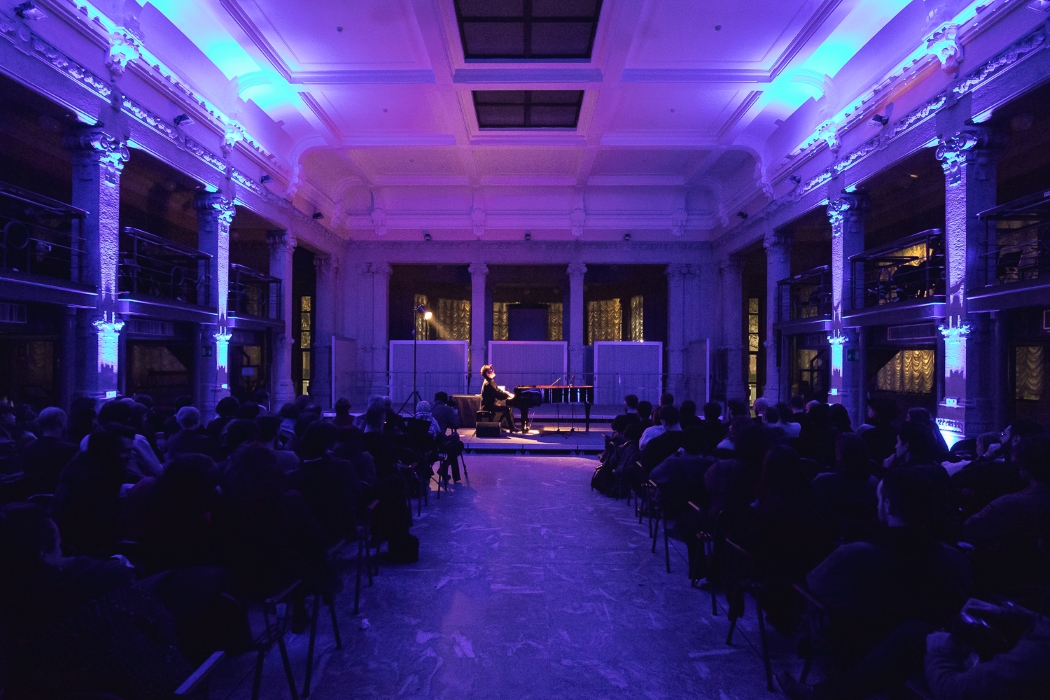
Keiichiro Shibuya's Live Concert for Piano and Electronics on the evocative stage of Palazzina Liberty in Milan.
Founder of the label ATAK and producer of "THE END", the world's first vocaloid opera, Keiichiro is one of the leading voices at the junction between experimental electronics and new media languages.
An exclusive download code for an excerpt from the new release by Toshiya Tsunoda on Presto!? Records will also be available for free with every ticket. Gathering echoes and vibrations through its groundbreaking approach to field recording, Tsunoda realized an eulogy to Naguara Bay, a soon to be lost area that is currently being transformed in a military defense-facility.
KEIICHIRO SHIBUYA
Composer, Musician. Born in 1973. BA of Composition, Tokyo National University of Fine Arts and Music.
In 2002, Shibuya has established ATAK, a music label releasing CDs of cutting-edge electro-acoustic works by various artists all over the world.
In 2012 he has staged "THE END", the world’s first vocaloid opera combining imagery and computer music, without starring any human performers. After that, "THE END" is performed in Paris, Amsterdam, Hambrug and Aarhus.
Currently, "THE END" is requested to be played by several major art festivals in the world.
Now he is based in Tokyo and Paris.
He does many cross-sectional collaboration works with researchers and artists including Takashi Ikegami (professor in the Department of General Systems Sciences at the University of Tokyo), Hiroshi Ishiguro (robot scientist), Hiroshi Sugimoto (artist), Jérémie Bélingard (Étoile of Ballet of the Paris Opera).
Season 2016/17 of Palazzina Liberty in Musica. A project promoted by Comune di Milano, Area Spettacolo.
Powered by Edwin Europe
Picture from the performance, credits to Delfino Sisto Legnani:
28.10.2016 - DJ Stingray "Psyops for Dummies + Purge" - EP - Out Now!
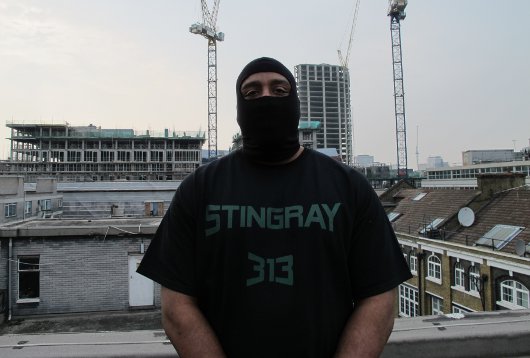
Expanded 2016 reissue of DJ Stingray’s killler EP for Lorenzo Senni’s Presto!? label, originally turned out in 2012, now reshuffled and reloaded with two extra pieces. The originals are just as strong as we remember them, with particular string highlights in the shadow-boxing hardstep tackle of Fullbodyscan and the furtive low end frequency manipulation of The Sadist III, whilst the new cuts reveal a possibly updated production palette betrayed by the plangent 3D dynamics and super-coiled core of Hypoalgesia, and again in the more spacious balance of soulful chord progressions and brute undertow in Cognitive Load Theory. Then again maybe that’s just us? Fuck knows, but either way they’ve made a wicked EP even better!
(Boomkat)
Now available everywhere: Boomkat, Bleep, Kudos Records, iTunes, Spotify +++
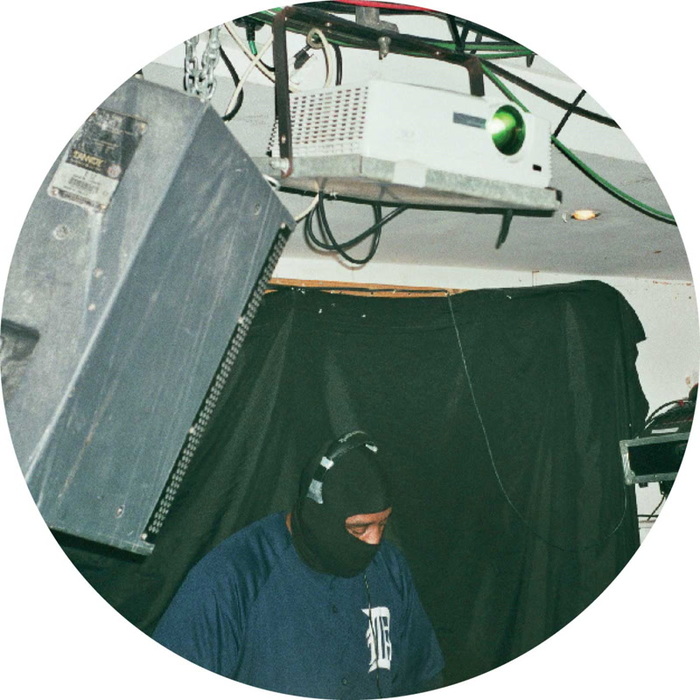
Photo by Lorenzo Senni.
27.06.2016 - EVOL "DO THESE" - DIGITAL - Out Now!

Arch rave deconstructionists EVOL dismantle your senses with this strobing suite of eleven brain-burrowing parts for Lorenzo Senni’s Presto!?
Depending your constitution, you will either end up thizzing or throwing up off a listen to these, maybe even both at the same time if you’re dead lucky!?
Mad ‘eads; you know what to do. (Boomkat)
available everywhere Boomkat, Bleep, Kudos Records, iTunes Store +++
Everything going wrong at the same time.
Vultures ascend over digital scree wi’in sight of garbage dump.
Opportunistic loops-not-loops hack into your credit card but it’s fine.
Like the batteries in a synthesizer about to die, but it was broken anyway, so <kein Ahnung>, duckie.
Diagrams of ascent/descent, planes over Heathrow/Tegel/JFK/other airports are available.
Organisms, microscopic, enlarged, burrow, through, telephone, cables, even, now.
The iterative combat of every day life and other over-dramatic crescendos.
How it feels to be interrogated, and maybe you like to be interrogated, and maybe that is okay too.
Endless pantomime of analogue collapsing/machinery bimbedying around.
Sound of eleven sugar-fuelled children bouncing on a bouncy castle with no adults supervising.
End.
Dale Cornish

Order it now! - http://presto.bigcartel.com/product/evol-mug
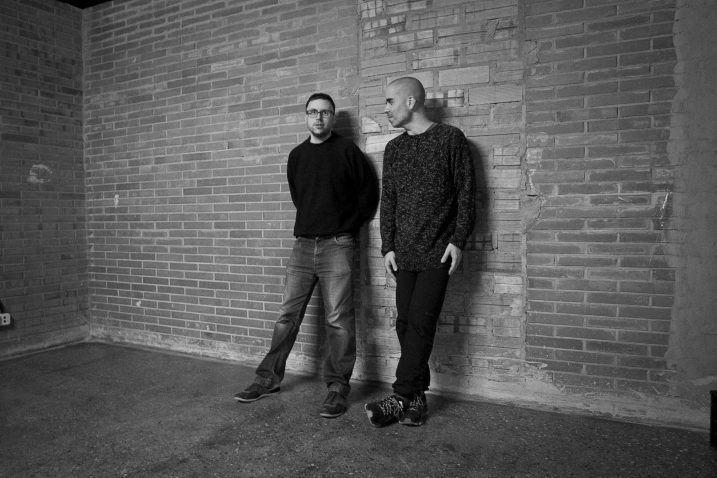
Photo by Gemma Planell.
10.06.2015 - Theo Burt "Gloss" - LP / DIGITAL - Out 1st July!
GLOSS is the title of Theo Burt's new music for Presto!?
this music is not so new for Theo
hearing a while ago in a planetarium me and Lorenzo were eager to hear more GLOSS Theo (at first reluctantly) revisited these recordings
eventually even setting up to record some additions
it seems much from these raw recordings hasn't changed
some rudimentary equalising and a few problematic tweaks to cut to vinyl
some decisions to start and stop the content
an aphasiac producer
a purge from Theo's previous references to CLUBLAND
not a fish in that barrel
though it would sound good in a club
like buzzing your tits off listening to trance compilations
wondering what frequency to place this on
not really much of a problem
until we consider its intentions
what to do to stop dying of boredom
what value dreams can be attributed?
a loss of affectivity from language
inside and/or outside a technocratic power paradigm
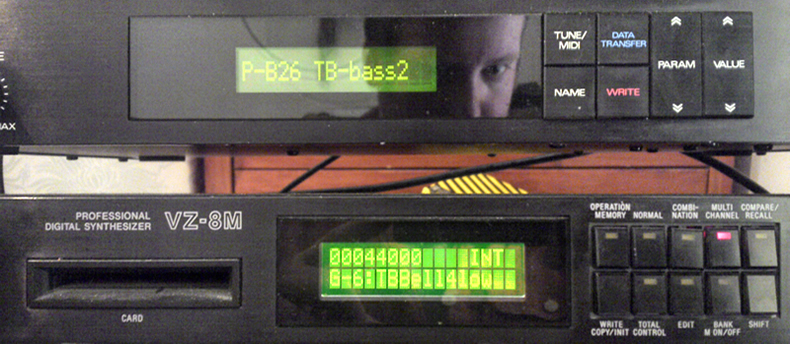
this music disconnects the stereo field from the connection of data and synthesis sending midi data through a 1988 CASIO rackmount synthesiser
a whole 12" of stumbling plasticity
the tempo is all over
like playing videos games very tired and worn out mentally absolutely hysterical at the thought of absolute government
as a result, the amount of innovation here is awful and not important a weak commodity
elevator music
not much seepage
everything you think you are you're not
and this is food for our disappointed imaginations
a visceral blast of audio austerity
grinning armyface
objects presented here are 1:1
not one for the headphones
Richard Sides, 2015
20.01.2014 - Palmistry "Lil Gem" - 12" Vinyl / DIGITAL - Out now!
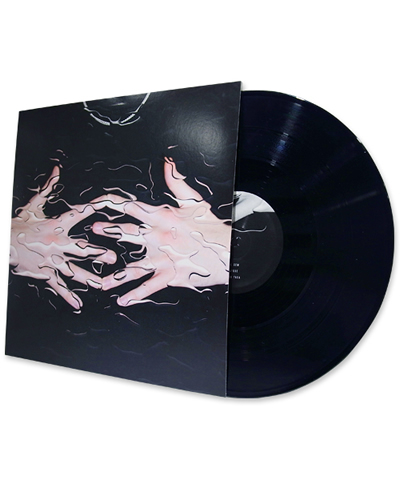
Ultra-modern pop diamonds from the forward London producer behind beats for Triad God and Dre Skull's MixPak.
'Lil Gem' is Palmistry's most important release to date, following celebrated productions for other artists and a couple of crucial
mixes via DIS magazine. It finds a very good home among the accelerated ears and minds on Lorenzo Senni's Presto!? label, sharing
a common taste for air-brushed electronic surfaces whilst furthering his own path of minimalist R&B, filigree ambient, and up-to-the-second
dancehall. They're the sort of pieces we could happily play on repeat, from the airborne baroque elegance of the instrumental title track to
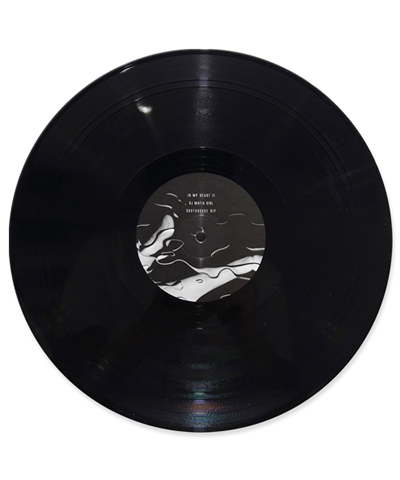
the seductive glow of 'Vapore' - like an adult inversion of SOPHIE's 'Bipp - to the emotional depths of 'In My Hearth II' and the codeine-tempered
'Southhouse Rip'. Big tip for fans of HTDW, James Ferraro, Evian Christ. (Boomkat) /// order your copy here - http://presto.bigcartel.com/
09.12.2013 - Gábor Lázár "ILS" - CD / DIGITAL
Eleven pieces have been composed on one note without transposition focusing on spectral changes and avoiding the traditional
temporal measurementsusing additive synthesis. The interface works with tester algorithms based on simple mathematical operations
which help in the compositional decision-making and trigger different temporal and spectral musical events run by an unique timeline.

Listen Album Preview here - https://soundcloud.com/presto-records/presto022preview
09.12.2013 - PALMISTRY 'Lil Gem' - Pre-Order now available
South London producer Palmistry (aka Benjy Keating) responsable for TRIAD GOD's (Hippos in Tanks) production and music,
fresh from a collaboration with James Ferraro and a single out on MixPak join in with Presto!? on this amazing work tha moves between
hermetic sometimes hyper-minimalistic R&B rips, fine ambient tones and 'dancehall' overtures on low freq domain.

PRE-ORDER NOW and get FREE MP3 DOWNLOAD! - http://presto.bigcartel.com/
11.11.2013 - GATEKEEPER 'Young Chronos' EP - Video Premiere on Dazed Digital
Gatekeeper are open to interpretation. An ultra-masculine voiceover introduces the anxious and agitated, dark and absurd grandiosity
of "Sword of the Gathering Clouds" like it’s a trailer for Armageddon itself. Is it a fabulous story or terrifying reality? It depends on how you look at it.
You could read a fatalistic accelerationist impulse, with the music’s cavernous echo and monstrous growl crashing through simulated choral patches
and hurtling towards self-destruction. It's an interpretation that seems especially true when Aaron David Ross uses words like “compression”, “accelerated” and “speed”...
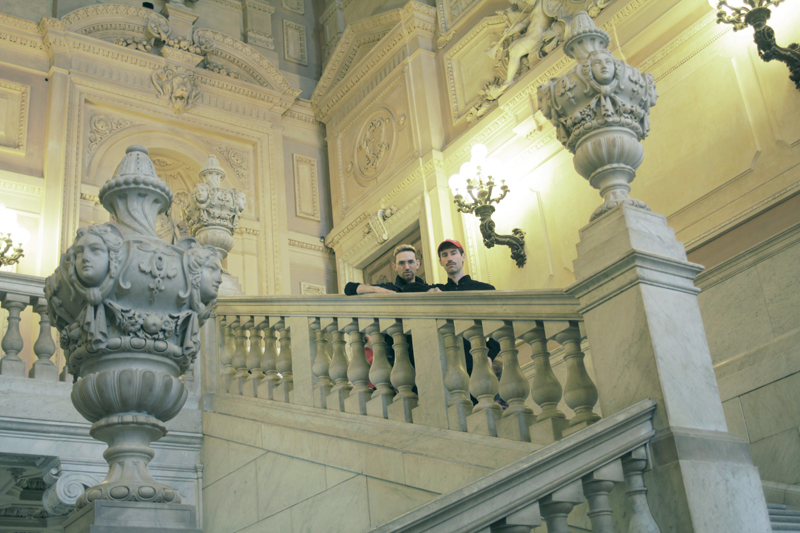
Alex Gvojic video for "Sword of the Gathering Clouds" here on Dazed Digital - http://www.dazeddigital.com/gatekeeper
22.10.2013 - GATEKEEPER "Young Chronos" USB TOKEN / PIRATE-BAY
After the multi-ecology genesis [and subsequent conflagration] of last year's 'Exo,' Gatekeeper's 'Young Chronos' now escalates to c-limit energy
strata and commits catastrophic time-portal sabotage. The New York City duo's findings will be released in the form of an official Piratebay
torrent and 300 USB tokens on Presto!?.
Time-engineering blasphemies and neo-sapient hominid scenarios including but not limited to: jump platforms in Gothic arcologies.
Profound regolith/crust excavation and mantle extraction. Neogene biomes in low-g terraria. Endo-Templar counterpoint on cycloid viols and
paleo-psaltery. Tertiary-stage flarefusion-equipped Dutch hunting parties engaging titanichthys super-shoals.
Orpheid Witness fleets in godlike hypo-cacolayer suspension. Quantum-solid martyrdom for St. Eligius and trimillennial chorus. Lycanthrope combat
on the plains of Northern Europe. Narcomorph collective events on Phobos forgoing corpoferric insulation. Polymeliac Elizabethan exoscouts
encountering depth charges in asteroid fields. Zen-grunt gnosis performed in hyper-iterative Hadean habitats. Dirac wave-converters outside
of Roanoke. Teutonic-Wallachian ground forces supplied with pulse rifles. Thracian quasar-injection in Jovian atmospheres causing the Sienna effect. Thermographically-enhanced heat-seeking archers in dawn mists. Steampunk-m arias in entropy-null silicate mausolea.
Please be advised: permanent unlimited respawning.
"Young Chronos" will be released November 11th directly in the form of an official Piratebay torrent and 300 USB tokens on Presto!?.
Gatekeeper Official Soundcloud: https://soundcloud.com/gatekeeper-online
"Young Chronos" Piratebay Torrent - http://thepiratebay.sx/torrent/9168415
BUY NOW Gatekeeper "Young Chronos" Limited USB TOKEN here - http://presto.bigcartel.com/

15.10.2013 - THE POINT OF NO RETURN "Come & Get It" - Presto!? 5th anniversary / SERIES OF EVENTS 2014
"... A common definition of the simulacrum is a copy of a copy whose relation to the model has become so attenuated that it can no longer properly
be said to be a copy. It stands on its own as a copy without a model. Fredric Jameson cites the example of photorealism.
The painting is a copy not of reality, but of a photograph, which is already a copy of the original. Deleuze, in his article "Plato and the Simulacrum,"
takes a similar definition as his starting point, but emphasizes its inadequacy. For beyond a certain point, the distinction is no longer one of degree.
The simulacrum is less a copy twice removed than a phenomenon of a different nature altogether: it undermines the very distinction between
copy and model. The terms copy and model bind us to the world of representation and objective (re)production.
A copy, no matter how many times removed, authentic or fake, is defined by the presence or absence of internal, essential relations of resemblance
to a model. The simulacrum, on the other hand, bears only an external and deceptive resemblance to a putative model. The process of its production,
its inner dynamism, is entirely different from that of its supposed model; its resemblance to it is merely a surface effect, an illusion.
The production and function of a photograph has no relation to that of the object photographed; and the photorealist painting in turn envelops an essential difference. It is that masked difference, not the manifest resemblance, that produces the effect of uncanniness so often associated with the simulacrum.
A copy is made in order to stand in for its model. A simulacrum has a different agenda, it enters different circuits.
Pop Art is the example Deleuze uses for simulacra that have successfully broken out of the copy mold: the multiplied, stylized images take on a life
of their own. The thrust of the process is not to become an equivalent of the "model" but to turn against it and its world in order to open a new space for
the simulacrum's own mad proliferation. The simulacrum affirms its own difference. It is not an implosion, but a differentiation;
it is an index not of absolute proximity, but of galactic distances..."
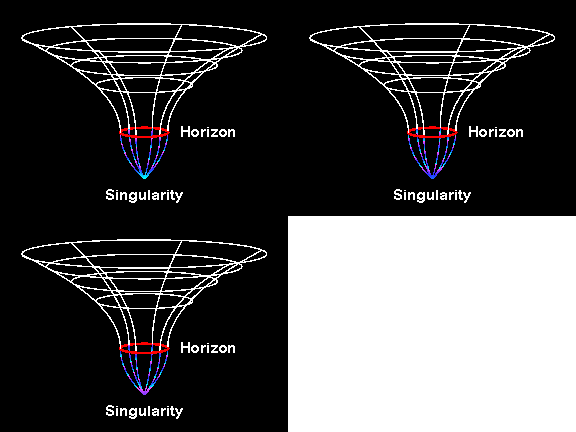
full article here - http://www.anu.edu.au/hrc/first_and_last/works/realer.htm
02.10.2013 - Gábor Lázár "ILS" - CD / DIGITAL
Gábor Lázár is a Budapest based artist working with digital sound synthesis and self-developed interfaces.
In his work he attempts to avoid the traditional temporal measurements and composes pieces based on one note with focus on spectral
changes using additive synthesis. His interface works with tester algorithms based on simple mathematical operations which help
in the compositional decesion-making and trigger different temporal and spectral musical events run by an unique timeline.
Gábor studied electronic music and media art at University of Pécs - Faculty of Music and Visual Arts and he is co-founder of a label
called Last Foundation. His first release has been published in April 2013 in collaboration with Russell Haswell including four short
pieces of his works and a full-length composition from Russell on a C46 split cassette limited to100 numbered copies.
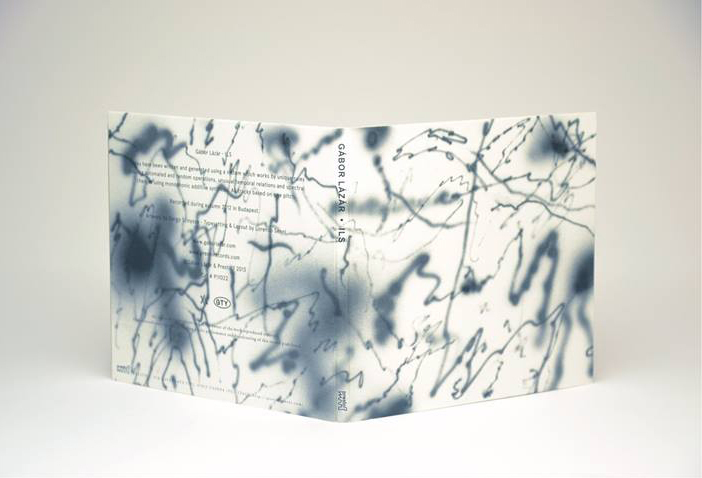
"ILS" (Interconnected Logical Systems) will be released late october: cat# P!?022
more info about Gabor Lázár here - www.gaborlazar.com
01.09.2012 - DJ STINGRAY "Psyops For Dummies" - CREDIT CARD SHAPED USB STICK + DIGITAL
The Sadist pt. III - 4:25
Fullbodyscan - 4:19
The Strategy Of Tension - 4:48
Disinformation - 5:08
Sherard Ingram - DJ STINGRAY - has been an active member in Detroit's electronic music community for nearly 25 years now.
Never shy of a collaboration, Ingram spent much of the '90s teaming up with Carl Craig, Anthony 'Shake' Shakir and Kenny Dixon Jr. to create a
rich downtempo sound as Urban Tribe, with culminated in the release of 1998's much-lauded The Collapse of Modern Culture album.
He was then recruited to be the tour DJ for Drexciya in their final days, taking to the decks as DJ Stingray and masking his face from
the audience, something he continues to do for all of his DJ appearances.
In recent years, his production work, as DJ Stingray, Mystic Tribe A.I., and Urban Tribe (released on Rephlex), has focused much more on
his solo talents, and is now grounded in the futuristic electro style that is associated with his DJ sets. His 2011 solo debut record on
Belgium's Mewe label, "Aqua Team", is an international acclaimed double 12" of super-developed strand of hyper-speed deep aquatic
electro
techno defined "some seriously special gear in a dance music world populated by clones of clones and replicas of imitations".
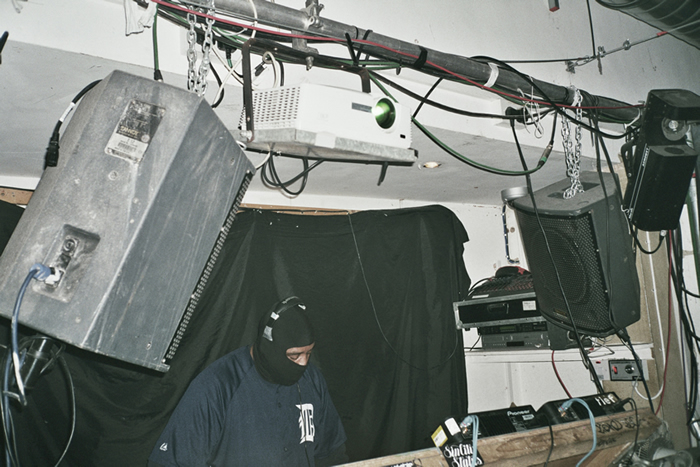

Ahead of Stingray's eagerly awaited NRSB-11 album with Heinrich Mueller, Lorenzo Senni's boundary-pushing Presto!? label presents four
precise electro data-bursts by the Detroit legend. Regular readers of these pages will know we hold Stingray productions in very high regard and
it's great to witness his enduring relevance with successive generations of cutting edge electronic futurists.
His 'Psyops For Dummies' session offers four uncompromising biomechanic movers for digital DJs and urban headphone dwellers,
implanting the panoramic sci-fi visions and pinging electro of 'Disinformation' or signature hardstep swerve of 'Fullbodyscan' and
'The Strategy Of Tension''s militant funk into the digital stream, and on a format that really fits the rhetoric. (Boomkat)
DJ STINGRAY fb fan page: https://www.facebook.com/pages/DJ-Stingray/182977445069234
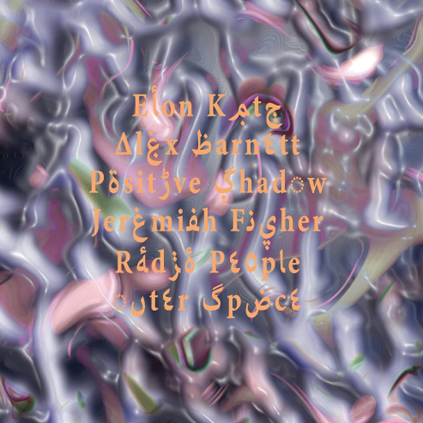
28.08.2013 - OUTER SPACE, RADIO PEOPLE, ELON KATZ, J. FISHER, POSITIVE SHADOW, ALEX BARNETT "box" 3XCS30 BOX + DIGITAL
Triple C30 clamshell boxset. Total playing time: 90 minutes - Six of the underground's stranger creators in the first Presto!? cassette box.
Elon Katz - one of the guys behind Citirax's Streetwalker and HiT's White Car - serves 15 minutes of mulched, queasy-but-sensual modular
electronics coming off like a shroom-high Bruce Haack who finds a wormhole into Edward Artemiev's studio, and shares a shell with Alex Barnett's
quarter hour of mystic, inwardly weaving horror theme synths and funereal, buried drums.
Another ferric regular, Henry Glover - veteran of Agents of Choas, Catholic Tapes and Irma Vep - melts 15 minutes of mercurial modular twinkle
and kosmiche noise on his side, shared with the labyrinthine alien explorations of former Oakeater Jeremiah Fisher. Sam Goldberg of
Radio People invokes classic John Carpenter on the 3rd tape, split with Outer Space's wavering kosmiche drones and radiophonic ambience.
Youtube Preview: http://www.youtube.com/watch?v=8H3AgjJ36gQ
10.08.2012 - ATTILA FARAVELLI - NICOLA MARTINI "s/t" LP / booklet + DIGITAL
Shiftings, displacings. The gap of sensory perception is offsetted on another curve; the gap remains the same, but the scale changes.
Material infiltrates in material itself.
The process is a fulfillment of a rite, needful for finding myself inside of the pores, firctions, interstices and membranes that compose materials.
Osmosis, as a mental concept of porosity that consists of all forms, something comes out from resonant space; added and relocated mass of material
in the space; nothing will be subtracted. Only constant, the impossibility of pore’s filling, none is perfectly isolated from the outside and from within.
The transmigration of matter in the surrounding space is seen as an absolute process and, in the same time, addicted to everything, even from himself;
involutions and constant envelopes, there is no hierarchy, everything is considered mentally on the same level of work,
exploded, low-cut, each thin layer from its nearest neighbor.
A soft sphere try to keep contained inside her the more she can , but some grains come out, the process is constant.
Attila Faravelli and Nicola Martini are two of the most innovative italian artists working in the field between sound art, electro-acoustic music
and raw resonanting materials.
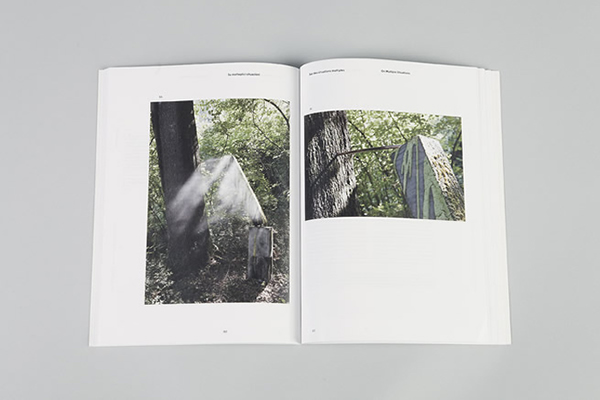
Nicola Martini Official Tumblr + full text - http://nicolamartini.tumblr.com/
20.01.2012 - HECKER "2/8 Bregman 4/8 Deutsch 7/8 Hecker 1/8 Hõller" - 2 x 10"
Presto!? is happy to announce the release of "2/8 Bregman 4/8 Deutsch 7/8 Hecker 1/8 Hõller",
a double 10" vinyl set produced and compiled by
Florian Hecker with a contribution by Carsten Höller.
The title indicates the percental inputs of the eight pieces, intertwines practical, theoretical and conceptual proportions and its audible dramatizations.
6/8 of the pieces are untitled, 2/8 and are titled 'Gelbgrün' and 'UpDown', 8/8 play on 45 RPM.
Arnheim, Rudolf and Grundham, Uta. 2001. The Intelligence of Vision: An Interview with Rudolf Arnheim. In Cabinet 2: 95-100.
Bregman, Albert S. and McAdams, Stephen. 1979. Hearing Musical Streams. In Computer Music Journal 3, no. 4 (December): 26-43.
Cambridge, Massachusetts: MIT Press.
Bregman, Albert S. 1994. Auditory Scene Analysis. Cambridge, Massachusetts: MIT Press.
Deutsch, Diana. 1974. An Auditory Illusion. In Journal of the Acoustical Society of America 55: 18- 19.
1986. An Auditory Paradox. In Journal of the Acoustic Society of America 80: 93.
Moore, Brian C. J.. 1977. Introduction to the Psychology of Hearing. Cambridge: University Press Cambridge.

Florian Hecker Official Blogspot: http://florianhecker.blogspot.it/
16.01.2012 - MARCUS SCHMICKLER "Bari Workshop" - LP
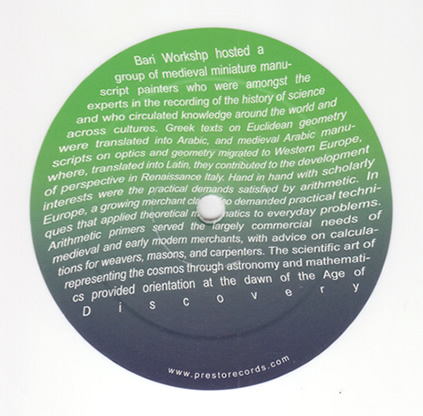
Bari Workshop hosted a group of medieval miniature manuscript painters who were amongst the experts in the recording of the history of science
and who circulated knowledge around the world and across cultures.
Greek texts on Euclidean geometry were translated into Arabic, and medieval Arabic manuscripts on optics and geometry migrated to
Western Europe, where, translated into Latin, they contributed to the development of perspective in Renaissance Italy.
Hand in hand with scholarly interests were the practical demands satisfied by arithmetic.
In Europe, a growing merchant class also demanded practical techniques that applied theoretical mathematics to everyday problems.
Arithmetic primers served the largely commercial needs of medieval and early modern merchants, with advice on calculations forweavers,
masons, and carpenters.
The scientific art of representing the cosmos through astronomy and mathematics provided orientation at the dawn of the Age of Discovery.
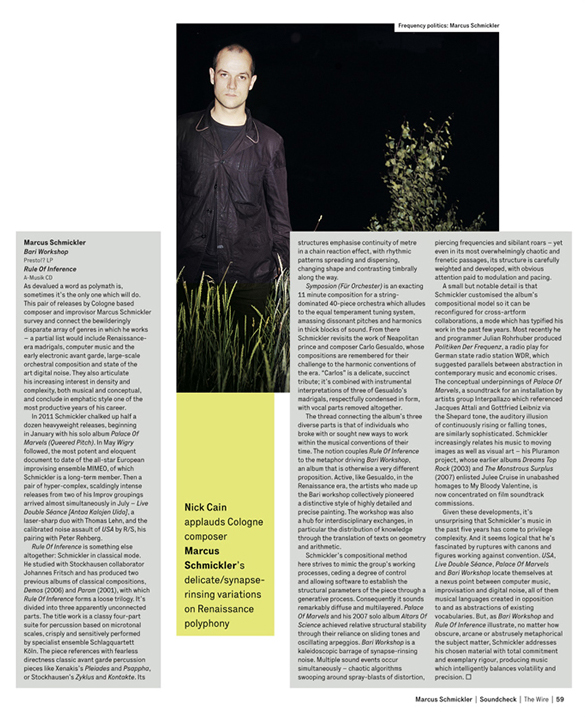
Marcus Schmickler official website: piethopraxis.org/
01.09.2011 - MATTIN "Object Of Thought" LP
"Object of Thought" is a stunning must have release by one of the most deep thinking artist in the field of noise and improvised music;
Mattin's voice is crushed and modulated by feedbacks and distortions and reassembled into a stream of multilayered thoughts
and abrasive/ harsh sounds. This is the Mattin's newest work since "Noise & Capitalism", the critically acclaimed book that explores the relationship
of experimental music with the economic system that we are living in.
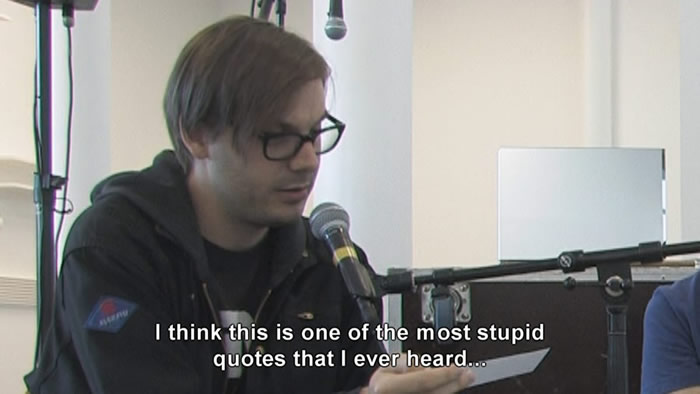
"... Is it possible to take self-reflexivity to the point of positive feedback while making a commodity out of my intellect?
Can this process help me to understand how I am objectified by capitalism? This is a very difficult question, as I am using English which firstly,
is not my mother tongue, and secondly is the language more aligned
with capitalism. To what extent does the use of English language shape my thoughts and actions? If our general intellect is appropriated by capitalism,
can we get it back through a process of improvisation with our thoughts? Can my unconscious be my instrument for improvisation?
Can we produce our subjectivity through the language that we are improvising with? ... "
"... During the first week of February 2010, from Monday to Friday, I appropriated the usual working times (9 to 5pm) in order to set up a framework
and impose some discipline. I went to Alpha Electro-acoustic Studio, Visby, I recorded my thoughts and then began to cut, edit, distort ...
as a way of making a montage of my own subjectivity, as a way to dismantle myself. If noise can be everything it can also be my lack of articulation.
By using my thought processes as material for improvisation, I tried to explore the limitation of the given situation, understanding that at the same time
i am objectitfying my thoughts in the vinyl that you are holding in your hands." (taken from the "Object of Thought" LP front cover)
The Stranger The Greater: http://www.mattin.org/
02.08.2011 - LORENZO SENNI "Dunno" CD
Produced, edited, mixed by Lorenzo Senni and mastered by Marcus Schmickler, "Dunno" is the very first official release from founder of Presto!?.
His previous release "early works" (2007) is a collection of old re-edited tracks mainly influenced by early laptop heroes mego style.
Now with "dunno" we have a pure computer music record where digital psychedelia meets brutal pulasr synthesis trains and sharp fm streams.
built up with a double approach, "dunno", is something between vintage experimentalism of the computer music pioneers and the new digital
brutality of fat, acid glissandos and shepard tones in rave style. using a large palette of computer synthesized sounds and a sophisticated
musical awareness he creates ten tracks of beautiful artificial energies and abstract pleasure.

Lorenzo Senni official website: www.lorenzosenni.com
23.05.2011 - CM VON HAUSSWOLFF / JUAN PEDRO FABRA / JAN HAFSTROM "Graf Spee" LP
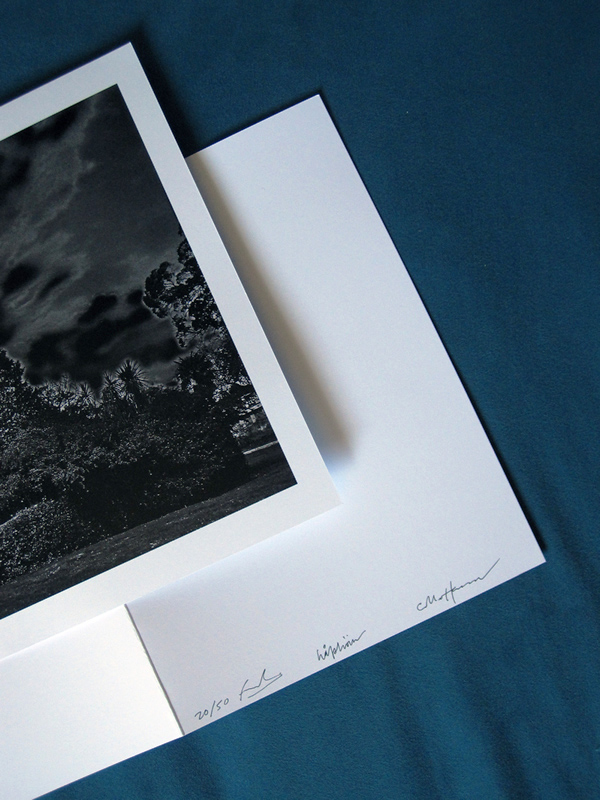
The music of "Graf Spee" was composed and recorded at the Castle by CM von Hausswolff in 2007 and 2009.
Two tracks of incredible beauty from one of the masters of contemporary electronic music.
Deep & Epic drone massages from The King.
"Graf Spee" is a collaboration between artists CM von Hausswolff, Jan Håfström and Juan Pedro Fabra.
Graf Spee I is a collaborative audio-visual work permanently installed at Wanås, Sweden on May 13 2007.
Graf Spee II is a collaborative audio-visual work installed at Momentum, 5th Nordic Biennial of Contemporary Art in Moss, Norway, between Aug 29 - Oct 18 2009.
"Francisco Tito Guemberena woke up early. It was Friday the 15th of December and another beautiful and sunny day in the Uruguayan capital. On his usual morning walk down to the city center he witnessed something extraordinary... " (excerpt taken from front cover text of Graf Spee LP).
Carl Michael Von Hausswolff official website - http://www.cmvonhausswolff.net/
23.05.2011 - EVOL "Fart Synthesis"C30
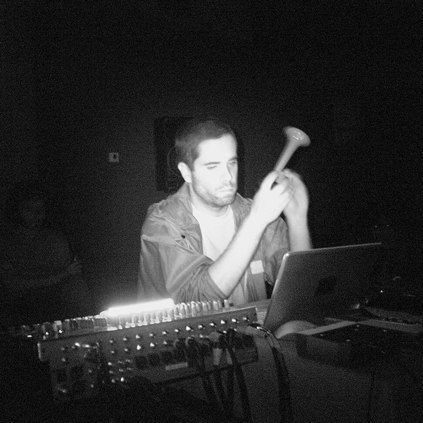
"Fart Synthesis" is the 8th episode in EVOL's ongoing Punani series, and was edited from live recordings in Osaka, Kiev
and Toulouse between 2008 and 2009. All sounds were synthesized on the fly on various computers.
The final tracks were assembled in Barcelona in the spring of 2009 using generative
algorithms to splice and rearrange a large amount of sound files.
The title of this cassette comes from a series of chats and discussions on digital synthesis techniques by Rubén Patiño (aka Pato)
and Roc Jiménez de Cisneros.

EVOL official website http://vivapunani.org/
23.05.2011 - JOHN WIESE "Zombie" LP
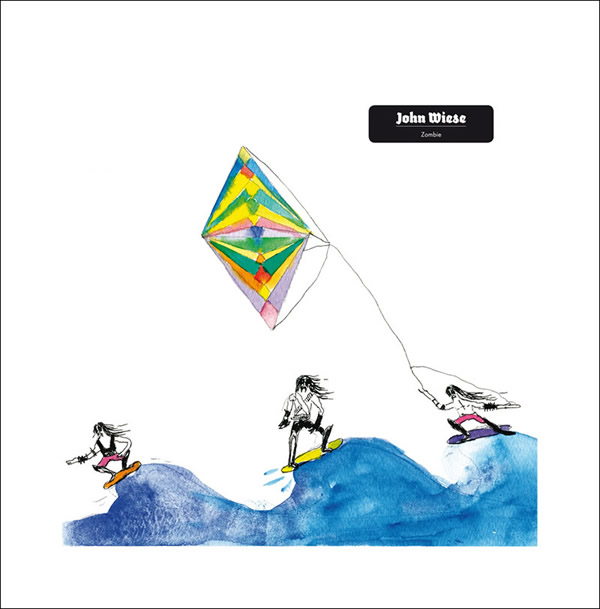
A very unusual album by John Wiese, almost the furthest perimeter of what we've come to expect.
For years Wiese has developed a highly personal approach to sound, steering clear of nearly every convention of musical language
- repetition, melody, instrumentation, in exchange for a totally amorphous yet hyper tight compositional style.
For this album, what started as a personal experiment out of love for the band Drunks With Guns, Wiese works against his own
grain with three new LP-specific compositions of rigid loop music, referencing Drunks With Guns, Sissy Spacek and debuting his
first composition for piano, performed by Mac Mann (Get Hustle, Antioch Arrow). Includes linear notes by John Wiese. Edition of 300 with sheet music.
Offiial John Wiese Website: http://www.john-wiese.com/
PRESTO!? ARCHIVE on DISCOGS - http://www.discogs.com/label/Presto!%3F